


Get
93% Off!
on Lifetime Exclusive Deal
Don’t Miss out this deal, it comes with Password Manager Free of cost.

What is Swatting? Have you ever gotten an unknown phone call? Probably have, but this circumstance is a little different. The person on the other end calmly tells a dispatcher they’ve shot a family member and are holding hostages at your address.
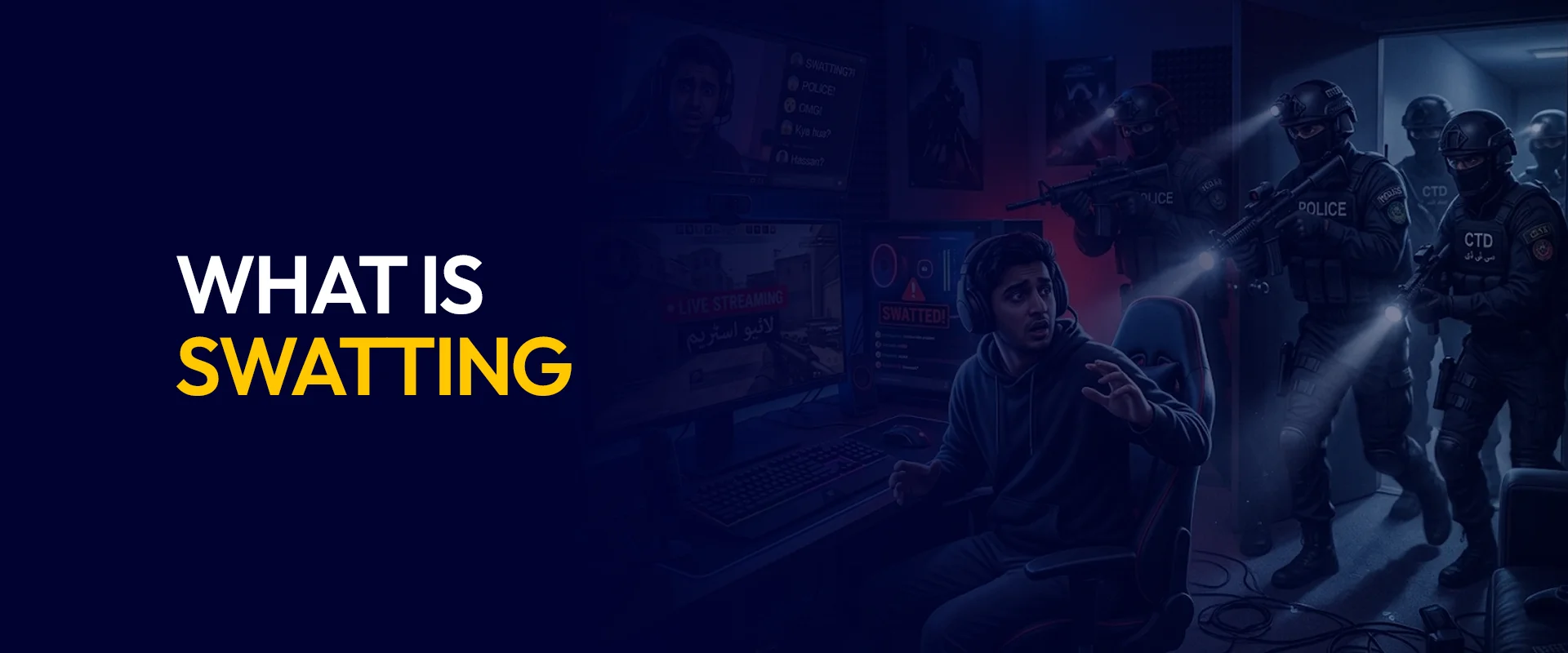
Within minutes, armed officers surround your home, treating you as a deadly threat. In this circumstance, you’d be completely confused. This is because you haven’t done anything wrong, and the situation can get a bit scary. That is the gist of what swatting is.
However, someone did use your address to send a tactical police team to your door. That is what Swatting is. It’s one of the most dangerous forms of online harassment because it turns the systems designed to protect you into a weapon against you.
Swatting is a dangerous act of making a false emergency report to law enforcement with the intent of triggering an aggressive tactical response.
This response usually involves a SWAT team sent to someone else’s location as a practical but vindictive joke. The term comes from those SWAT (Special Weapons and Tactics) units.
It works when the caller reports anything but a minor issue; they’re often pretty dangerous. They claim there’s an active shooter, a hostage situation, a bomb threat, or some other life-threatening emergency.
The goal is to force dispatchers to send the maximum response, as fast as possible, and the targeted/swatted person is the victim.
They’ve done nothing wrong. The attacker simply found, bought, or guessed enough information about them, usually their home address, to make the hoax call believable.
Most swatting incidents follow a predictable pattern. Understanding the steps helps you recognize where your information might be exposed. Here’s how the attack takes place:
Before making the call, the attacker needs a target and an address. They find this through several methods:
Once the attacker has an address, they call 911. What they say is scripted, urgent, specific, and designed to get past the questions a dispatcher would normally ask.
They’ll spoof the caller ID or use a VoIP number so the call can’t be traced. Some go further. They’ll use AI-generated voices or play pre-recorded audio in the background. These include gunshots, screaming, or anything that makes the hoax sound real.
Dispatchers treat the call as a genuine emergency because it really sounds like an emergency over the phone. They send officers, often including a SWAT team, to the address. The responding officers believe they are walking into a life-threatening situation.
The victim usually has no warning in situations like this. They find out at the time when armed officers surround their home, bang on their door, or order them to the ground at gunpoint. Hoax’ like these can really get a victim injured or killed.
Different swatters have different motives. However, the common thread is that someone is deliberately using another person’s fear, and the police response meant to protect people, as a weapon.
Here’s what it looks like:
| Motives | What it looks like |
| Online disputes | A heated argument in a game lobby, forum, or comment section escalates into real-world retaliation. |
| Targeting public figures | Politicians, journalists, activists, and streamers are targeted for their public stance or visibility. |
| Gaming rivalries | A competitor’s address is used to send police to their home mid-stream or mid-match. |
| Disrupting institutions | Schools, hospitals, government offices, and airports are targeted to cause mass disruption. |
| Hate-motivated harassment | Some states prosecute swatting as a hate crime when the false report targets someone based on race, religion, or another protected characteristic. |
The FBI has tracked a troubling shift. Swatting started in gaming communities and by 2025, attackers were selling swatting-as-a-service using AI-cloned voices. By 2026, coordinated campaigns targeted schools, government buildings, and hospitals.
You may have read some guides that most describe swatting as a gaming problem or an online harassment issue. That undersells it. Here’s actually what the data shows:
According to the FBI’s Omaha field office, swatting occurs thousands of times annually across the United States. Nebraska’s State Patrol alone sees two to three incidents per week, whether in the state or nationwide.
Also, there was a 70% surge in school hoax threats in South Carolina, prompting a federal warning in August 2026.
Swatters use VoIP numbers, caller ID spoofing, and SIM swapping to hide their identities. According to Nebraska’s Information Analysis Center, most calls “lead back to nothing,” and in some cases where investigators do find a trail, the perpetrator is in another country.
The FBI has responded by creating a virtual command center to collect and share swatting data with law enforcement in real time.
If caught, what are the penalties/punishments for swatting crimes? Well, the Federal charges for false information and hoaxes can carry:
State penalties usually vary dramatically. Michigan’s attorney general outlined the state’s specific charges, which stated:
In one 2026 case, an Oregon man charged with making dozens of hoax bomb threats to Ohio schools faced up to 10 years in prison. There was also another defendant who received 36 months for cyberstalking that included swatting.
Swatting is among some of the most dangerous crimes because it has killed people.
In 2017, Andrew Finch of Wichita, Kansas, was shot and killed by police responding to a hoax hostage report. The call originated from an online gaming dispute over a measly $1.50 bet. The caller, Tyler Barriss, received 20 years in federal prison.
The consequences extend beyond physical harm. Some victims endured:
There’s no guaranteed way to prevent swatting. But you can make yourself a harder target by reducing what’s publicly available about you. Here are a few ways to protect yourself:
Your home address, phone number, workplace, and daily routine are the core ingredients of a convincing swatting call. Keep them off public profiles, forums, and specifically gaming accounts. Most gamers get hot-headed with the worst intentions when playing aggressively.
It’s important to review old posts, photos, and check-ins. Even harmless details, like a street sign in the background or a package on your doorstep, can reveal your location.
If you stream, game competitively, or have a public online presence, use different usernames, email addresses, and phone numbers for your public persona versus your private life. And never make the mistake of adding your birthdate; it can lead to more details.
Many people forget about this. The FBI has warned that attackers sometimes gain access through compromised smart home devices. This helps them gather information or make a hoax more convincing. For this, always use strong, unique passwords and enable two-factor authentication.
Data leaks and people-search sites are common sources for the details attackers use. Use a data leak checker to see if your email or personal information has appeared in a known breach.
This portion of our guide is easier said than done, especially considering how critical the situation can get.
However, if armed officers arrive at your door because of a hoax call, your safety depends on cooperation. Here’s what to do:
Swatting is a serious crime, and the damage can be extreme. It's a federal offense and a state offense in many jurisdictions. Penalties range from several years to life in prison if someone dies. Only sometimes. This is because attackers use Caller ID spoofing, VoIP numbers, and SIM swapping, which make real-time tracing difficult. However, investigators can sometimes identify swatters through phone records, internet records, and digital evidence. The FBI has created a national database to track incidents and share information across agencies. There’s no single motive. Some reasons include online disputes, gaming rivalries, revenge, targeting public figures, hate-motivated harassment, and disrupting institutions. Some attackers sell swatting as a service. There's no single national count of how often swatting occurs, but the FBI estimates it happens thousands of times a year across the US. A 70% surge in school hoax threats in one state prompted a federal warning in 2026. You may have civil legal options, including suing for damages. The family of Andrew Finch, who was killed by police responding to a hoax call, filed a civil lawsuit seeking $25 million. You need to consult a lawyer if you've been targeted. If you accidentally call 911, stay on the line. Tell the dispatcher it was a mistake. Hanging up can prompt a police response, and while that's not swatting (which requires intent to deceive), you can still be arrested for wasting resources. No, it cannot. However, a VPN encrypts your traffic and hides your IP address, which reduces what websites and your internet provider can see. However, a VPN doesn't remove your address from data brokers or public records. Swatting protection requires reducing your overall digital footprint, not just hiding your IP.Is swatting a real crime or just a prank?
Can police trace a swatting call?
Why do people swat others?
How common is swatting?
Can I sue someone for swatting me?
What if I accidentally call 911 and hang up?
Does a VPN protect me from swatting?
Hope this guide has answered everything on “What is Swatting.”
This kind of attack often works because your personal information is easy to find. The attacker doesn’t need to know you, and they don’t need a motive; they just need your address.
You can’t remove every trace of yourself from the internet. But you can make it harder for someone to build a convincing hoax around you. Always limit what you share, audit your old posts, and secure your accounts.
And if it happens to you, cooperate with responding officers first. Sort out the truth after everyone is safe.
Take Control of Your Privacy Today!Unblock websites, access streaming platforms, and bypass ISP monitoring.
Get FastestVPN
© Copyright 2026 Fastest VPN - All Rights Reserved.
Don’t Miss out this deal, it comes with Password Manager Free of cost.