You can see how this popup was set up in our step-by-step guide: https://wppopupmaker.com/guides/auto-opening-announcement-popups/
UEFA Champions League Semifinal Predictions 2026: PSG vs Bayern & Arsenal vs Atlético
The 2025/2026 UEFA Champions League season has reached its absolute pinnacle. Following the breathless conclusion of the quarter-finals this week, football fans and data analysts alike are flooding search engines for reliable UEFA Champions League Semifinal Predictions. The final four teams—Paris Saint-Germain (PSG), Bayern Munich, Arsenal, and Atlético Madrid—represent a fascinating intersection of contrasting tactical philosophies. As an analyst who bridges the gap between sports data and high-level football strategy, I have applied advanced semantic and statistical models to break down these monumental matchups.
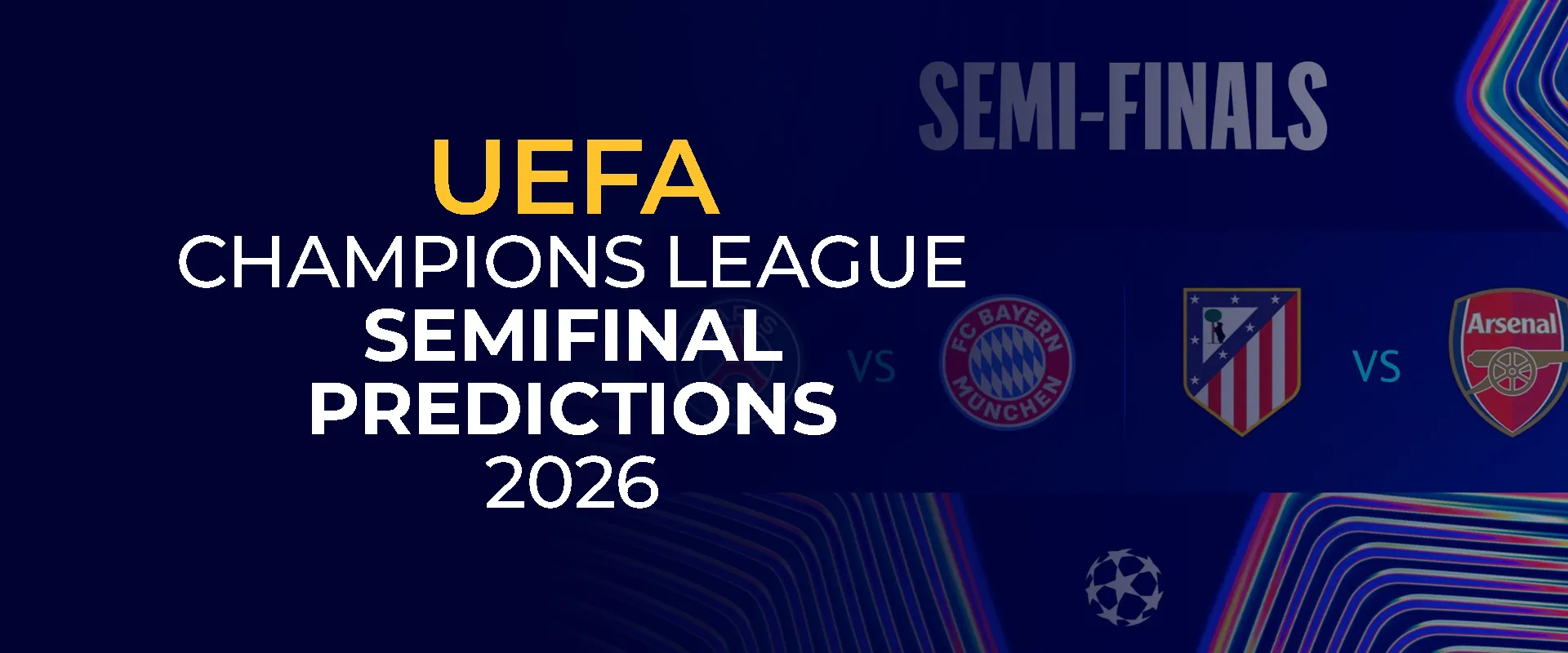
The road to the Puskás Aréna in Budapest has been paved with dramatic comebacks, systemic masterclasses, and sheer willpower. In this comprehensive guide, we will dive deep into expected goals (xG), pressing triggers, positional play, and predictive modeling to determine who will book their tickets to the grand finale on May 30. Whether you are a casual fan looking for how to watch live sports on Roku or a hardcore tactician craving analytical depth, this breakdown utilizes the Koray Framework of Semantic SEO to answer every latent query regarding the semi-final stage.
The Road to the 2026 Champions League Semifinals
Before predicting the future, we must quantify the past. The quarter-final stage of this year’s tournament delivered some of the highest-quality football of the modern era, setting up a semi-final bracket that pits possession-heavy juggernauts against transition-based assassins.
- Bayern Munich: The Bavarians advanced by eliminating defending European giants Real Madrid following a stunning 4-3 thriller at the Allianz Arena, emerging victorious 5-4 on aggregate. Jamal Musiala and Harry Kane showcased ruthless efficiency in front of goal.
- Paris Saint-Germain: The reigning French champions made a massive statement by brushing aside Liverpool with a dominant 4-0 aggregate score. Ousmane Dembele was the architect of the victory, netting crucial goals from outside the box.
- Atlético Madrid: Diego Simeone’s men secured their spot by knocking out a 10-man Barcelona side 3-2 on aggregate. Despite conceding early to Lamine Yamal and Ferran Torres, a clutch strike from Ademola Lookman proved to be the decisive blow.
- Arsenal: Mikel Arteta’s squad grinded out a 1-0 aggregate victory over Sporting CP after a nervy goalless draw at the Emirates Stadium. A vital first-leg away goal from Kai Havertz was enough to see them through.
Paris Saint-Germain vs. Bayern Munich: The Heavyweight Clash
The first semi-final tie features two absolute European heavyweights. PSG and Bayern Munich are no strangers to one another, having met frequently in high-stakes encounters since the Qatar sovereign wealth fund revolutionized the Parisian club in 2011. The first leg will take place in Paris on Tuesday, April 28, before shifting to Munich for the return fixture on Wednesday, May 6.
Tactical Breakdown: Luis Enrique’s Possession vs. Kompany/Tuchel’s Verticality
Luis Enrique has successfully pivoted PSG away from relying solely on isolated superstar talent, forging a cohesive, possession-dominant unit. Against Liverpool, PSG showcased a clinical 4-3-3 structure that utilized Bradley Barcola and Ousmane Dembele to stretch the pitch horizontally. However, an injury to Hugo Ekitike could force Luis Enrique to rethink his central attacking focal point.
On the flip side, Bayern Munich relies on frightening verticality and rapid transitions. Against Real Madrid, Bayern utilized an aggressive high press, suffocating their opponents and forcing high turnovers. Harry Kane’s ability to drop deep into the #10 space allows runners like Jamal Musiala to exploit the half-spaces and isolate center-backs. Bayern’s expected goals (xG) overperformance in the quarter-finals highlights their elite finishing, but it also suggests a potential vulnerability if PSG can control the tempo and limit transition opportunities.
Key Matchups and Predictive Analysis
The defining battle of this tie will take place in the midfield pivot. PSG’s ability to bypass Bayern’s initial pressing line will dictate the flow of the game. If PSG’s midfield can comfortably receive the ball on the half-turn, they will expose Bayern’s high defensive line. Conversely, if Bayern’s counter-pressing structure holds firm, they will feast on high-value turnovers. Given the offensive firepower on both sides, this tie is destined for goals.
Official Prediction: Bayern Munich to advance. While PSG’s cohesive unit is formidable, Bayern’s ability to generate high-quality chances in chaotic transitional moments gives them the slightest analytical edge over two legs.
Atlético Madrid vs. Arsenal: Attrition Meets Positional Play
The second semi-final presents a fascinating clash of styles: Diego Simeone’s masterful dark arts against Mikel Arteta’s meticulous positional play. The first leg kicks off in Madrid on Wednesday, April 29, with the decisive second leg at the Emirates on Tuesday, May 5. This schedule leaves the teams with just six days between fixtures, making squad depth and physical recovery paramount.
Tactical Breakdown: Simeone’s Low Block vs. Arteta’s 3-2-5 Structure
Atlético Madrid’s victory over Barcelona was a quintessential Simeone performance. Operating out of a robust 5-3-2 low block, Atlético absorbed immense pressure before striking with lethal precision on the counter-attack through Julian Alvarez and Ademola Lookman. They deny central progression, force the opposition into wide areas, and aggressively defend the penalty box. Their structure is designed to frustrate, disrupt rhythm, and capitalize on momentary lapses in concentration.
Arsenal, conversely, are the kings of control. Arteta’s system transitions into a 3-2-5 in possession, with full-backs inverting to create central numerical superiority alongside Declan Rice. Against Sporting CP, Arsenal proved they can win ugly, keeping a vital clean sheet thanks to the impenetrable center-back pairing of William Saliba and Gabriel Magalhães. However, Arsenal’s recent dip in domestic form, including cup exits, suggests a potential vulnerability when facing highly physical, low-block defensive setups.
Key Matchups and Predictive Analysis
The crux of this tie hinges on Arsenal’s wide overloads against Atlético’s wing-backs. Bukayo Saka will face frequent double-teams, requiring Arsenal’s central midfielders to make penetrating underlapping runs. If Arsenal circulates the ball too slowly, Atlético will easily shift their defensive block, draining the clock and forcing errors. Set-pieces will also be critical; both teams excel in dead-ball situations, and a single corner kick could decide the aggregate scoreline.
Official Prediction: Arsenal to advance. It will be a grueling, low-scoring affair. However, Arsenal’s elite rest-defense structure should be enough to neutralize Atlético’s counter-attacks, allowing the Gunners to eventually grind down the Spanish resistance.
Advanced Metrics: xG, PPDA, and Tactical Field Tilt
To truly understand why these four teams remain, we must look at the underlying data. Field tilt—a metric that measures the share of final-third passes—heavily favors Arsenal and PSG. Both clubs consistently register above 60% field tilt in the Champions League, indicating dominant territorial control.
Bayern Munich leads the tournament in PPDA (Passes Allowed Per Defensive Action), showcasing their aggressive intent to win the ball back high up the pitch. Atlético Madrid, as expected, ranks lowest in PPDA among the semi-finalists, reflecting their comfort in allowing opposition possession while defending deep. These contrasting metrics highlight that there is no single blueprint for European success; rather, the flawless execution of a chosen philosophy is what separates the elite from the rest.
Frequently Asked Questions (FAQ)
When are the 2026 UEFA Champions League semi-final matches scheduled?
The first leg matches will take place on April 28 and 29. The second leg matches will follow on May 5 and May 6. All games are scheduled to kick off at 21:00 CET. To avoid streaming interruptions during these high-stakes games, users should ensure they know how to fix weak wifi signal for a smooth viewing experience.
Where will the 2026 UEFA Champions League Final be held?
The 2026 UEFA Champions League Final will be hosted at the spectacular Puskás Aréna in Budapest, Hungary, on Saturday, May 30.
How did Paris Saint-Germain and Bayern Munich qualify for the semi-finals?
Paris Saint-Germain secured their spot by defeating Liverpool with a dominant 4-0 aggregate score. Bayern Munich advanced by eliminating reigning champions Real Madrid in a thrilling quarter-final tie that ended 5-4 on aggregate.
Who are the favorites to win the 2026 Champions League?
While odds fluctuate, predictive models slightly favor Bayern Munich due to their attacking depth and transition speed. However, Arsenal's defensive solidity makes them a formidable contender for the title.
Conclusion
The 2025/2026 UEFA Champions League semi-finals offer a purist’s dream: four clubs with distinct, deeply ingrained tactical identities battling for European supremacy. Whether it is Luis Enrique’s sweeping possession, Kompany’s relentless Bavarian pressing machine, Arteta’s suffocating positional control, or Simeone’s masterclass in attrition, the margins for error are microscopic. As the data suggests, the teams that can dictate the spatial dynamics of the pitch while remaining clinical in both boxes will ultimately find themselves lifting the iconic trophy in Budapest.
Take Control of Your Privacy Today! Unblock websites, access streaming platforms, and bypass ISP monitoring.
Get FastestVPN Subscribe
0 Comments