You can see how this popup was set up in our step-by-step guide: https://wppopupmaker.com/guides/auto-opening-announcement-popups/
H₃PO₄ Password Strength Meme: When Chemistry Meets Cybersecurity
In the world of IT, where memes spread faster than zero-day vulnerabilities, one particular joke has been quietly (and sometimes loudly) trending among sysadmins, developers, cybersecurity professionals, and chemistry enthusiasts alike: the H₃PO₄ vs H₂SO₄ password strength meme.
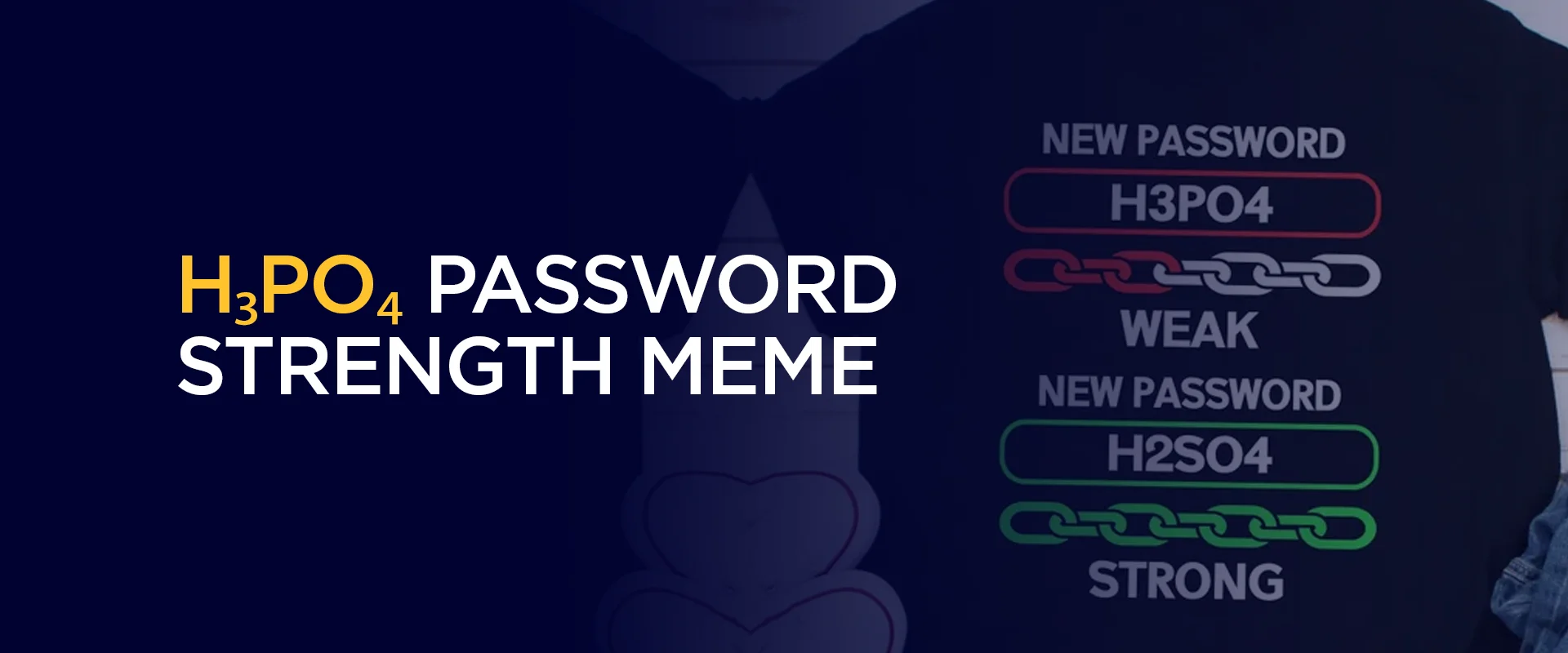
You’ve probably seen it:
- New Password: H₃PO₄ → Weak
- New Password: H₂SO₄ → Strong
It’s a perfect storm of nerdy humor blending high-school chemistry knowledge with the eternal frustration of password policies. What started as a niche joke in tech and science communities has become a recurring favorite on Reddit, Instagram, Facebook IT meme groups, and cybersecurity forums. But why does it resonate so much? And what deeper lessons about passwords, security, and human behavior can we extract from this acidic punchline?
The Meme Explained: Weak Acid vs Strong Acid
At its core, the joke plays on a fundamental concept in chemistry: acid strength.
Phosphoric acid (H₃PO₄) is a weak acid. It doesn’t fully dissociate in water, meaning it doesn’t release all its hydrogen ions (H⁺) easily. The bonds between hydrogen and the phosphate group are relatively strong, so it only partially ionizes. In everyday life, you’ll find it in Coca-Cola (for that tangy bite), fertilizers, and rust removers.
Sulfuric acid (H₂SO₄), on the other hand, is a strong acid. It completely dissociates in water, aggressively releasing H⁺ ions. It’s one of the most powerful and widely used industrial acids used in everything from car batteries and fertilizer production to petroleum refining and, yes, even in the manufacturing of phosphoric acid itself.
The password checker (that annoying little meter on signup forms) doesn’t understand chemistry it looks at complexity, length, character variety, and common patterns. But in the meme, the system magically recognizes that H₂SO₄ “feels” stronger because of its reputation as a brutal, fully-dissociating acid. H₃PO₄ gets rejected as weak and ineffective.
It’s the kind of layered joke that makes chemists chuckle, and IT people nod in agreement: “Finally, a password policy that makes sense!”
Variations of the meme have popped up everywhere:
- A chemistry student tries C₆H₅COOH (benzoic acid, also weak) and is rejected.
- Switches to H₂SO₄ accepted with flying colors.
Merchandise followed quickly: T-shirts, posters, and mugs proclaiming “H₃PO₄ Weak / H₂SO₄ Strong” are popular in STEM circles.
Why This Meme Hits Different in IT Circles
IT professionals deal with password fatigue daily. We enforce complex requirements (uppercase, lowercase, numbers, symbols, no dictionary words, minimum 12–16 characters, change every 90 days or never, depending on who you ask), yet users still pick terrible ones like “Password123!” or “Summer2026”.
The H₃PO₄ meme brilliantly satirizes this. It shows a “smart” system that somehow applies domain-specific knowledge (acid dissociation constants, or pKa values) to judge strength. In reality, password strength meters are notoriously inconsistent one site’s “strong” is another’s “weak.”
This ties perfectly into classic IT humor like the famous XKCD Password Strength comic (correct horse battery staple), which argues that passphrase length and randomness beat forced complexity.
The chemistry version adds an extra layer for those who remember their high school acids and bases:
- pKa of H₃PO₄ (first dissociation): around 2.14 weak.
- H₂SO₄: fully strong for the first proton, pKa ≈ -3.
The lower (more negative) the pKa, the stronger the acid. H₂SO₄ is orders of magnitude more aggressive.
In IT terms: Think of weak passwords as phosphoric acid, they linger around, partially effective at best. Strong ones are like concentrated sulfuric acid; they dissolve security threats on contact (metaphorically).
A Quick Chemistry Lesson for Non-Chemists
Let’s break it down without the lab coat.
Acids are proton donors. Strong acids like HCl, HNO₃, and H₂SO₄ donate protons completely. Weak acids like acetic acid (vinegar) or H₃PO₄ hold onto them more tightly.
Why H₂SO₄ is stronger:
- Sulfur is more electronegative in this context, and the molecule’s structure allows easier release of H⁺.
- It has two replaceable hydrogens that can dissociate stepwise, and the first one does so very readily.
- Industrially, it’s produced on a massive scale; global production exceeds 250 million tons annually.
Phosphoric acid is triprotic (three hydrogens), but all dissociations are weaker. It’s safer to handle in dilute forms and less corrosive in many applications.
This scientific accuracy is what makes the meme land so well. It’s not just random; it’s correct nerd humor.
The Broader Context: Passwords Are Broken
The meme’s popularity reflects a deeper truth: traditional password-based authentication is fundamentally flawed.
According to various reports over the years:
- Billions of credentials have been leaked in massive breaches (RockYou2021, Have I Been Pwned, etc.).
- Humans are terrible at creating and remembering unique, complex passwords.
- Reuse across sites is rampant.
This is why the industry has shifted toward:
- Passkeys and passwordless authentication (WebAuthn, FIDO2).
- Password managers (Bitwarden, 1Password, LastPass).
- Multi-factor authentication (MFA) is mandatory.
- Zero-trust architectures.
Yet password policies remain a battleground. The H₃PO₄ meme pokes fun at how arbitrary these policies can feel.
Real-World Password Disasters
Consider some infamous cases:
- The 2012 LinkedIn breach exposed millions of hashed passwords.
- Colonial Pipeline ransomware attack partly attributed to a compromised password.
- Countless “123456” or “admin” still appear in logs.
If users treated passwords like strong acids, highly reactive and not to be taken lightly, we’d have fewer incidents.
Better Alternatives to H₃PO₄ (and Even H₂SO₄)
While H₂SO₄ is funny, it’s still terrible as an actual password:
- Short.
- Predictable pattern.
- Contains common symbols and numbers.
- Easily guessable if someone knows the meme.
True strong password strategies:
- Use a passphrase “CorrectHorseBatteryStaple” style (high entropy, memorable).
- Leverage a password manager to generate 20+ character random strings.
- Enable MFA everywhere.
- Use passkeys where available.
- Consider biometric + hardware keys for critical accounts.
For fun, chemistry-inspired strong passwords could be longer, randomized versions:
- H2SO4+Conc3ntr4t3d!Str0ngAcid2026 But even better: Let your manager handle it.
Why Does the Meme Use H₃PO₄ and H₂SO₄ Specifically
The joke works because it is scientifically accurate. Phosphoric acid (H₃PO₄) is a weak triprotic acid with limited dissociation, while sulfuric acid (H₂SO₄) is a strong diprotic acid known for its aggressive reactivity. In the meme, the password checker magically understands acid strength, treating H₂SO₄ as “stronger” due to its reputation. This clever play on pKa values (acid dissociation constants) makes the meme resonate with people who remember chemistry lessons and those battling strict password requirements daily.
Where Did the H₃PO₄ Password Meme Originate
The meme likely started on platforms like Reddit (r/chemistry, r/sysadmin, r/memes) and spread quickly through tech Twitter/X, Discord servers, and IT meme groups. It gained traction around 2022–2023 as password fatigue grew. Like many STEM memes, it spread organically in overlapping communities of developers, cybersecurity professionals, and science enthusiasts who appreciate layered jokes that only insiders fully understand.
Is Using H₂SO₄ (or Similar) Actually a Good Password
Absolutely not. While funny in the meme, “H₂SO₄” is a terrible real password. It is short, follows a predictable pattern, and has likely been shared widely online. Any experienced hacker or cracking tool could guess it quickly. The meme is satire, not advice. Real strong passwords should be long, random, and unique, ideally generated and stored by a reputable password manager.
What Cybersecurity Lessons Can We Learn from the H₃PO₄ Meme
The meme brilliantly satirizes poor password policies. It shows that simply adding symbols or numbers doesn’t guarantee strength. True password security relies on entropy, length, and uniqueness rather than superficial complexity. It also underscores the need to move beyond passwords entirely with passkeys, MFA, and passwordless authentication. The joke reminds us that human psychology and arbitrary rules often weaken security more than they strengthen it.
Why is this Meme So Popular in IT and Cybersecurity Circles
IT professionals deal with password policies every day. The H₃PO₄ meme resonates because it mocks the frustrating experience of creating “strong” passwords that still feel weak. It combines two beloved nerd cultures, chemistry and computing, creating an inside joke that sparks laughter and discussion. Its shareability on LinkedIn, Reddit, and tech forums makes it a perfect stress-reliever in high-pressure cybersecurity environments.
Are There Other Chemistry-Related Security Memes
Yes! Similar memes include HCl vs HF (strong acid but extremely dangerous), “Sodium Funny” jokes, or periodic table puns in code comments. The H₃PO₄ meme belongs to a broader tradition of STEM humor that includes XKCD comics, “sudo make me a sandwich,” and buffer overflow puns. These memes help humanize complex technical topics and build community among engineers and security experts.
How Can I Create Better Passwords Inspired By This Meme
Use the meme as inspiration for creativity, not literal formulas. Generate long passphrases with random elements (e.g., “CorrectStrongAcidBatteryDissociates2026!”). Better yet, let a password manager create 20+ character random strings. Combine this with multi-factor authentication and passkeys. Treat passwords like concentrated sulfuric acid handle with extreme care, never reuse, and keep them securely stored away from exposure.
The Cultural Impact and Spread
This meme thrives in communities like:
- r/memes, r/chemistry, r/sysadmin, r/iiiiiiitttttttttttt.
- IT humor Facebook groups.
- Instagram science accounts.
- Spiceworks and other admin forums.
It represents the intersection of STEM subcultures. Developers who double-majored or took gen-ed chemistry courses get an extra laugh. Chemistry teachers apparently have a reputation for strong password ideas.
Merch keeps it alive. Search for “H3PO4 password” on Etsy or Redbubble, and you’ll find plenty of options.
Lessons for IT Professionals and Security Teams
- Humor builds awareness: Memes like this can be great training tools. Use them in security awareness sessions.
- Context matters: Password strength meters should be smarter, but ultimately, education > enforcement.
- Balance usability and security: Overly strict policies lead to shadow IT and sticky notes.
- Evolve beyond passwords: The future is passwordless.
Fun Variations and Extensions
- HCl (strong acid) vs HF (weak but insanely dangerous).
- Organic acids: Acetic acid (weak) vs something stronger.
- Superacids like fluoroantimonic acid are an extremely strong password.
Or flip it: “My password is so strong it fully dissociates your database.”
Final Words
The H₃PO₄ password meme is more than just a joke. It’s a clever commentary on how we think about strength, complexity, and security in the digital age. It reminds us that true strength isn’t about looking scary on paper (or in formula form), it’s about being fundamentally robust and hard to break down.
Next time you’re forced to create yet another password, channel your inner chemist. Aim for something with high entropy, full dissociation of predictability, and zero weak bonds to dictionary words. And if your password manager ever labels H₂SO₄ as strong… well, at least you’ll get the joke.
Take Control of Your Privacy Today! Unblock websites, access streaming platforms, and bypass ISP monitoring.
Get FastestVPN
Subscribe
0 Comments